Planning · 6 min read
Rooftop Wedding Venues: A Complete Guide to Planning a Skyline Wedding
City views, golden-hour light and open-air dancing — what couples should know about weather, permits, capacity and costs before booking a rooftop wedding venue.
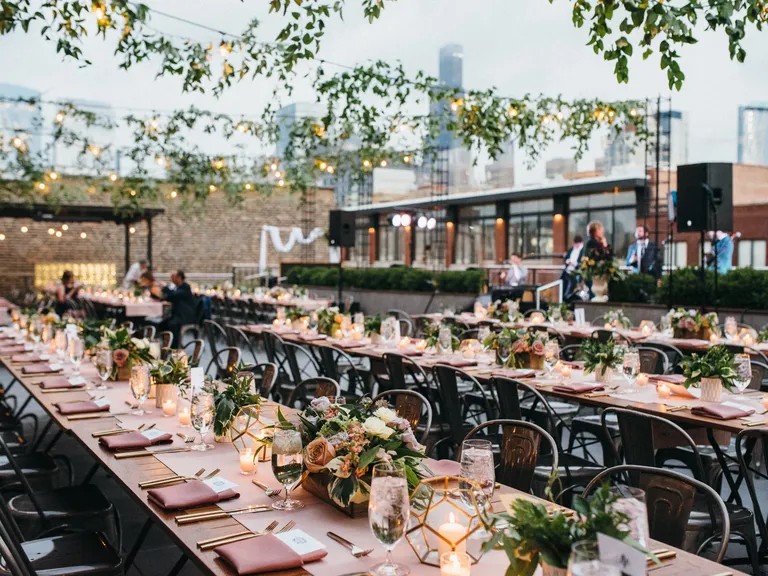
A rooftop wedding gives you something no ballroom can: the city itself as your backdrop. Skyline sunsets, twinkling lights after dark and open-air cocktails make rooftop venues one of the most requested wedding settings in America. They also come with unique challenges, from wind and weather to elevator logistics and noise curfews. This guide helps you plan a rooftop wedding that looks effortless.
Why Couples Choose Rooftop Venues
Rooftop venues combine urban energy with natural light. You get dramatic photographs, easy access to hotels and restaurants for guests, and a setting that needs little décor. Many rooftops sit on boutique hotels, so the wedding party can get ready downstairs and guests can stay overnight. For city couples, a rooftop also feels personal: you celebrate above the streets where your relationship happened.
Types of Rooftop Venues
Rooftop venues vary more than many couples expect. Hotel rooftops, like those on boutique Kimpton properties, typically offer in-house catering, coordinators and guest rooms. Dedicated event rooftops and penthouses — such as converted lofts or historic building tops — offer more flexibility with vendors and décor. Restaurant and bar rooftops suit smaller weddings and cocktail-style receptions, often with food-and-beverage minimums instead of a rental fee. Some venues combine an indoor event space with a rooftop terrace, which is ideal for weather backup. Browse our Rooftop Wedding Venues collection to compare skyline venues in cities like New York, Chicago, Miami, Los Angeles and Dallas.
Weather Is the Biggest Factor
Every rooftop wedding needs a real rain plan — not just a hope. Ask whether the venue has an indoor space that holds your full guest count, whether a tent can be installed and at what cost, and when the decision to move indoors must be made. Wind is the hidden challenge: it affects veils, candles, floral arrangements and sound. Choose low, weighted centerpieces, use hurricane glass for candles and ask your officiant to use a microphone. Heat matters too; in summer, look for shade structures, misting fans or an evening ceremony timed for golden hour.
Capacity, Elevators and Accessibility
Rooftop capacity is often limited by fire code and elevator access rather than floor space. Confirm the maximum for a seated dinner versus a standing reception. Ask how many guests the elevators move at once — getting 150 people up to a roof can take far longer than expected — and plan a staggered arrival with welcome drinks. Check that the rooftop is accessible for guests with limited mobility, and that vendors have a service elevator for rentals, catering and band equipment.
Noise Curfews and Permits
City rooftops are surrounded by neighbors, so many have outdoor music curfews, commonly around 10 or 11 p.m. on weekends. Some couples move the late-night party indoors or to a nearby bar. Ask whether amplified music is allowed outdoors at all, whether a live band is permitted, and whether special event permits are needed for tents or larger gatherings. Reputable venues handle much of this, but confirm in writing.
Costs to Expect
Rooftop pricing depends heavily on city, season and day of week. Saturday evenings in peak months command the highest rental fees and food-and-beverage minimums, especially in New York, Chicago and Los Angeles. Weekday or Sunday weddings, and off-season dates, can be significantly cheaper. Budget for extras that rooftops often need: heaters or fans, tent rentals, additional security, elevator attendants, and lighting for after sunset. Always ask whether service charges and taxes are included in a quoted minimum.
Photography and Timing
Plan your ceremony around sunset. A ceremony about 60 to 90 minutes before sunset gives you warm light for vows, golden-hour portraits during cocktail hour, and skyline lights for night photos. Ask your photographer to scout the rooftop at the same time of day beforehand. Blue hour — the 20 minutes after sunset — produces the classic glowing-city image couples love.
Questions to Ask Before Booking
What is the indoor backup space, and does it hold our full guest count? What are the seated and standing capacities? Is there an outdoor music curfew? Are tents, heaters or open-flame candles allowed? Do you require in-house catering? How many guests can the elevators carry at once? Is there a service elevator for vendors? What is included in the food-and-beverage minimum? Clear answers will help you compare rooftop venues by real value.
Final Thoughts
A rooftop wedding rewards careful planning with some of the most beautiful views a celebration can have. Choose a venue with a solid weather plan, time your ceremony with the sunset and plan for the logistics of elevators and curfews. Explore our Rooftop Wedding Venues collection to find a skyline that fits your city, guest list and style.