Planning · 6 min read
Medieval Castle Wedding Ideas: How to Plan a Fairytale Celebration in the USA
Great halls, candlelit feasts and stone towers — practical ideas for planning a medieval castle wedding in America without it feeling like a costume party.
America has no true medieval castles — but it has dozens of stone halls, towers and keeps built in a medieval spirit, and many of them host beautiful weddings. A medieval castle wedding can be romantic and elegant rather than theatrical, if you plan it well. This guide covers how to choose the right castle venue, how to style the day, and the practical details couples often overlook.
Understand What 'Medieval' Means in the USA
Before you start touring, set honest expectations. Most American castle venues are early-20th-century homes inspired by European architecture, purpose-built event castles, or museum properties with medieval artifacts. Hammond Castle Museum in Gloucester, Massachusetts, was built in the 1920s by inventor John Hays Hammond Jr. and filled with genuine medieval and Renaissance pieces. Thornewood Castle in Lakewood, Washington, incorporates parts of an English manor shipped across the Atlantic. Others, like The Castle at Rockwall in Texas or Castle McCulloch in North Carolina, were designed specifically as wedding and event destinations. None of this makes them less magical — it simply helps you compare them fairly. Ask each venue when it was built, which spaces are original, and what restrictions apply to historic rooms.
Choose the Right Type of Castle Venue
Castle venues tend to fall into three groups. Historic museum castles offer authentic atmosphere and dramatic interiors, but often come with strict rules on candles, décor attachments, guest counts and end times. Estate castles — private homes turned wedding venues — usually have gardens, lawns and overnight suites, so the wedding party can stay on site. Purpose-built event castles offer the most flexibility: modern kitchens, accessible restrooms, climate control and in-house coordinators, with medieval styling in the stonework and towers. Decide which matters more to you: authenticity, convenience or overnight experience. That single choice narrows your list quickly. Browse our Medieval Wedding Venues collection to compare castles by state, guest capacity and setting.
Plan a Banquet-Style Reception
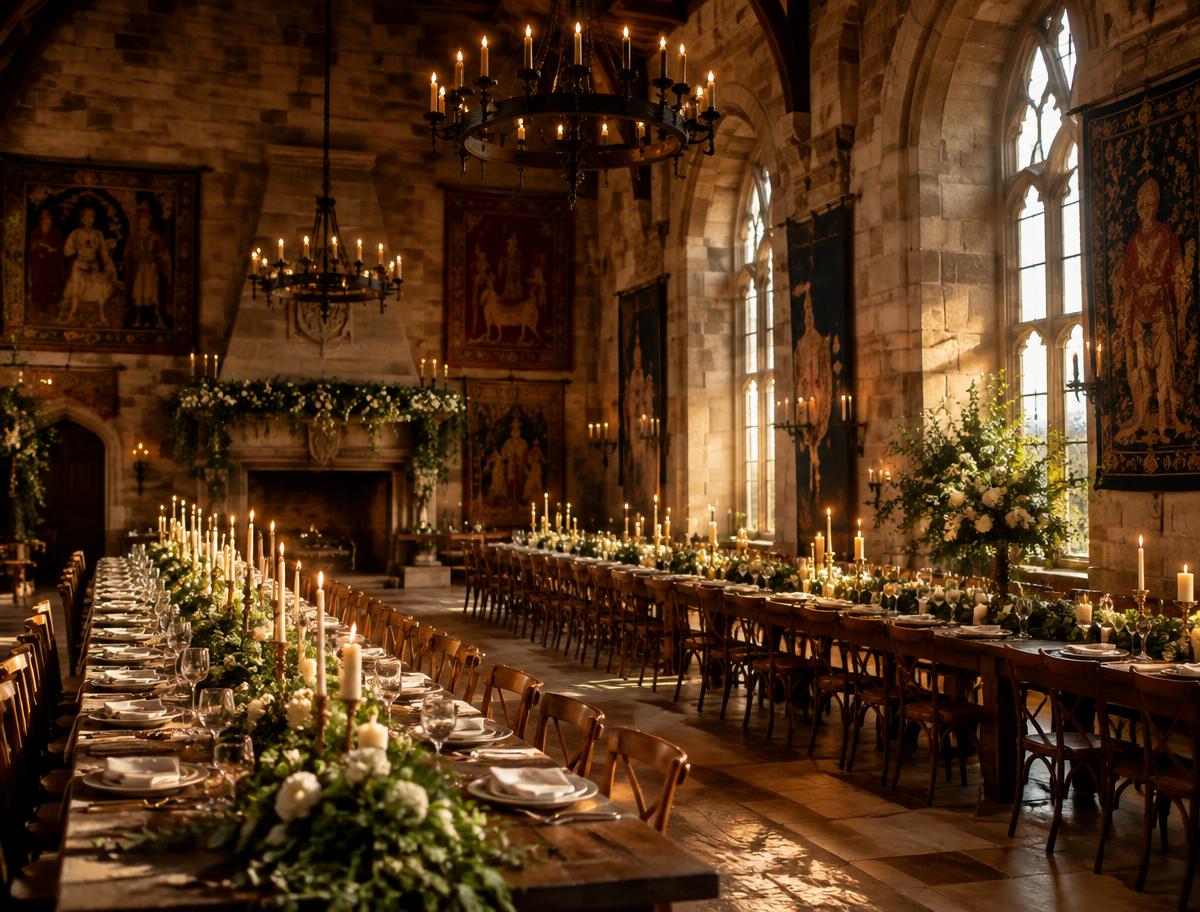
Nothing captures the medieval mood like a feast. Long wooden banquet tables, rather than round tables, instantly transform a great hall. Dress them with simple linen runners, greenery garlands, pewter or gold chargers and plenty of pillar candles (or LED candles where flame is prohibited). Family-style service — platters of roast meats, root vegetables, breads and cheeses passed down the table — encourages conversation and feels generous. Add a dessert table with fruit tarts and honey cakes, and serve mead or spiced cider alongside wine and beer. Many caterers can adapt a regular menu into a feast format without a premium, so ask before assuming it costs more.
Attire: Elegant, Not Costume
A medieval wedding does not require renaissance-fair costumes. Many couples choose modern gowns with medieval touches: long sleeves, velvet or brocade fabrics, corset bodices, flowing capes or a jeweled circlet in place of a veil. Grooms often look striking in deep-toned suits, frock coats or a tailored cloak for photos. If you want guests to join in, say so clearly on the invitation — 'medieval attire welcome but never required' keeps everyone comfortable. Jewel tones like burgundy, forest green, navy and gold photograph beautifully against stone walls.
Décor That Works With Stone
Castle interiors are already dramatic, so décor should enhance rather than compete. Candlelight is the single most effective element; layer candelabras, lanterns and votives at varying heights. Use heavy textiles — velvet table runners, tapestries, fur throws on ceremony benches — to soften stone. Florals look best loose and abundant: ivy, eucalyptus, garden roses, ranunculus, thistle and wildflowers. Iron chandeliers and wrought-iron arches suit the architecture. Avoid overusing props like swords and shields; one or two meaningful pieces, such as a sword for the cake-cutting, have more impact than a themed display.
Entertainment and Traditions
Medieval-inspired traditions add personality without feeling forced. Handfasting — binding the couple's hands with ribbon or cord — is a lovely ceremony addition with roots in Celtic and medieval Europe. During the reception, consider a lute or harp player for cocktail hour, a falconry display on the lawn, archery games, or a storyteller. Some venues, especially in Ohio, Texas and Kentucky, have relationships with jousting troupes or reenactors — always confirm insurance and safety requirements first. A grand entrance with trumpets or bagpipes is an easy, memorable touch.
Budget and Logistics
Castle venues range widely in price. Rental fees at smaller event castles can start in the low thousands for weekday events, while famous estates and historic properties in high-demand regions often command premium Saturday pricing and food-and-beverage minimums. Watch for costs couples overlook: required security or museum staff, approved-vendor lists, candle restrictions that mean renting LED alternatives, shuttle buses for hilltop locations, and overnight lodging minimums. Check accessibility carefully, as stairs, towers and uneven stone floors can be difficult for older guests. Always ask about a rain plan, because many castles hold ceremonies outdoors in courtyards or gardens.
Questions to Ask Before Booking a Castle
Which rooms are included in the rental, and which are off-limits? Are open-flame candles allowed? What is the maximum guest count for a seated dinner, not just a standing reception? Is there an approved caterer list? What time must music end? Is overnight accommodation available, and is it required? Are there photography restrictions inside historic rooms? What is the backup plan for outdoor ceremonies? Clear answers to these questions help you compare castles on value rather than first impressions alone.
Final Thoughts
A medieval castle wedding works best when it leans on atmosphere — candlelight, feasting, stone and storytelling — rather than costumes and props. Choose a castle that fits your guest list and budget, embrace a banquet-style reception, and let the architecture do the rest. Explore castle and keep venues in our Medieval Wedding Venues collection to start planning your own fairytale.